St. Thomas vs. St. John: Which USVI Island Is Right for You?
Quick answer: St. Thomas is the better fit if you want an easy arrival, more restaurants and nightlife, and a livelier home base. St. John is the better fit if you want a quieter, nature-led trip shaped by Virgin Islands National Park, which protects roughly 60% of the island. Many travelers do both with a split stay.

Both islands are part of the U.S. Virgin Islands, so English is spoken on both, U.S. residents don’t need a passport to visit either one, and both have genuinely beautiful beaches you can enjoy any time of year. The real question isn’t which island is objectively better, it’s which one fits how you actually like to travel.
How Do the Two Islands Compare at a Glance?
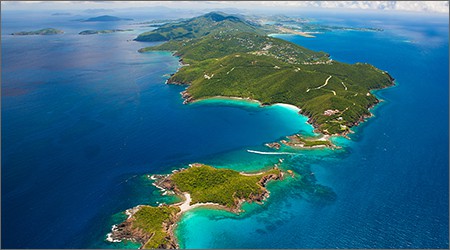
St. Thomas is the second largest of the USVI at 32 square miles, with a year-round population of roughly 42,000 that swells considerably with the millions of visitors who pass through the territory each year. It’s more developed, with an international airport, cruise ship docks, and a wide range of shopping and dining.
St. John is by far the smallest of the three main islands at just 19 square miles, with a year-round population of under 4,000, most concentrated around Cruz Bay. There’s no airport on St. John, most visitors arrive by ferry from St. Thomas, and roughly 60% of the island is protected as Virgin Islands National Park.
Do You Want an Easy Arrival, or Is the Journey Part of the Trip?
St. Thomas wins on pure convenience. You fly directly into Cyril E. King Airport (STT), just a couple miles from Charlotte Amalie, and you’re minutes from restaurants, beaches, and marinas.
St. John takes an extra step. There’s no airport, so most visitors fly into St. Thomas and then take a ferry to Cruz Bay, commonly the Red Hook to Cruz Bay route, which runs about 20 minutes. If you consider the ferry ride part of the vacation, salt air, harbor views, that first “we’re really here” feeling, St. John feels like an intentional choice rather than an inconvenience.

Are You Craving Energy, or Chasing Quiet?
St. Thomas is the social island. Charlotte Amalie is the historic center and today’s hub of duty-free shopping, cruise activity, and nightlife. If you like having options, bars, live music, sunset happy hours, last-minute dinner plans, St. Thomas keeps you entertained well after dark.
St. John is the nature-first island. With most of the land protected as national park, it feels less developed and more focused on beaches, trails, and small-town evenings in Cruz Bay. Outside of Cruz Bay, most of the island winds down by 8 or 9 PM, though a handful of beach bars stay lively later.
Which Island Has Better Beaches?
Both islands have genuinely beautiful beaches, they just deliver a different experience.
St. Thomas offers iconic, easy-access beaches with real amenities. Magens Bay is the headline act, an arcing stretch of sand with restrooms, showers, food and drink, and rentals, a true show-up-and-relax beach day.
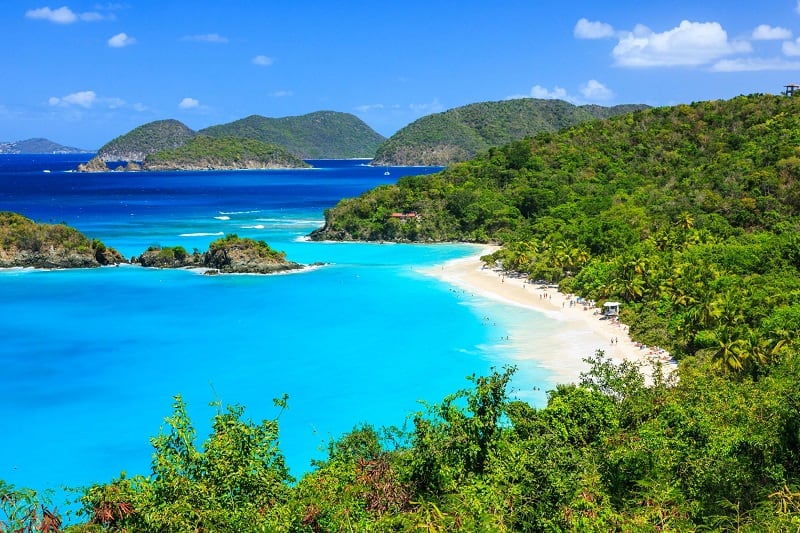
St. John’s beaches sit largely within or beside protected parkland, which keeps the scenery more intact and the water especially clear. Trunk Bay is the standout, both for its beauty and its underwater snorkeling trail managed by the National Park Service.

Is Snorkeling a Top Priority?
St. John is the more snorkel-forward island. The national park protects a lot of classic reef-and-sand combinations, and beaches like Salomon and Honeymoon are reachable on foot from Cruz Bay via the Lind Point Trail.
St. Thomas offers more variety, snorkeling alongside diving, sailing, and day-trip options, a strong fit if you want to mix water time with shopping and nightlife in the same trip.
What About Restaurants and Nightlife?
St. Thomas has the edge in sheer volume, more restaurants, more late-night options, more flexibility for a “what do we feel like tonight” evening.
St. John is smaller and more curated. Cruz Bay is lively for its size and easy to bar-hop casually, but it’s not trying to be a big-city dining scene. The tradeoff is you’re never far from a quiet view and a morning that starts without traffic.
Which Island Fits Your Travel Group?
Families do well on either island. St. Thomas suits families who want more convenience and activity options close by. St. John suits families who love nature, uncrowded beaches, and a calmer pace.
Couples often gravitate to St. John for the quieter pace and scenic, secluded moments, sunsets, hikes, and beaches that feel personally discovered. St. Thomas suits couples who want a more active pace with nightlife built in.
Friend groups can go either way, St. Thomas if the crew wants nightlife and variety, St. John if the crew bonds more over early snorkels, hikes, and long dinners that don’t turn into late nights out.
Should You Pick One Island, or Do a Split Stay?
If you’re staying 3 to 4 nights, it’s usually smarter to pick one home base and commit. If you’re staying 5 or more nights, a split stay often gives you the best of both, start on St. Thomas for an easy arrival and a few lively nights, then finish on St. John to slow down. Even a single-island trip can include a day trip to the other, the Red Hook to Cruz Bay ferry is short enough to make “beach on St. John, dinner back on St. Thomas” a realistic day.
So, Which Island Is Right for You?
Choose St. Thomas if you want the most convenient arrival, the widest mix of restaurants and nightlife, and a trip that blends beaches with shopping and history.
Choose St. John if you want a quieter, nature-led trip shaped by the national park, more hiking, more snorkeling, more room to let the schedule stay loose.
Or do what a lot of experienced USVI travelers do, combine them. Fly into St. Thomas, enjoy the energy, then ferry over to St. John for the exhale.
When you’re ready to turn this comparison into an actual itinerary, browse Vacation VI’s curated villa collections on St. Thomas and St. John, then let our concierge team help you dial in the details, provisioning, in-villa chef service, boating and day sails, water sports, and private transport, so your trip runs smoothly from arrival to last sunset.
Frequently Asked Questions
Do I need a passport to visit St. Thomas or St. John?
No, both are part of the U.S. Virgin Islands, so U.S. residents don’t need a passport to visit either island.
How do I get from St. Thomas to St. John?
Most visitors take a ferry from Red Hook, St. Thomas to Cruz Bay, St. John, a trip of about 20 minutes.
What percentage of St. John is national park?
Virgin Islands National Park protects roughly 60% of St. John, according to the National Park Service.
Is St. Thomas or St. John better for a first-time USVI visit?
Both work well for first-timers. St. Thomas offers an easier arrival and more built-in amenities, while St. John offers a quieter, more nature-focused introduction to the islands. Many first-time visitors choose a split stay to experience both.

Kirsten Morgan is a passionate travel blogger based in the stunning St. John, U.S. Virgin Islands. With a deep love for island life and a knack for storytelling, Kirsten brings the vibrant culture, breathtaking landscapes, and hidden gems of the Caribbean to life through her captivating blogs.